Dew Point Thermal Imaging Damp Survey Uk
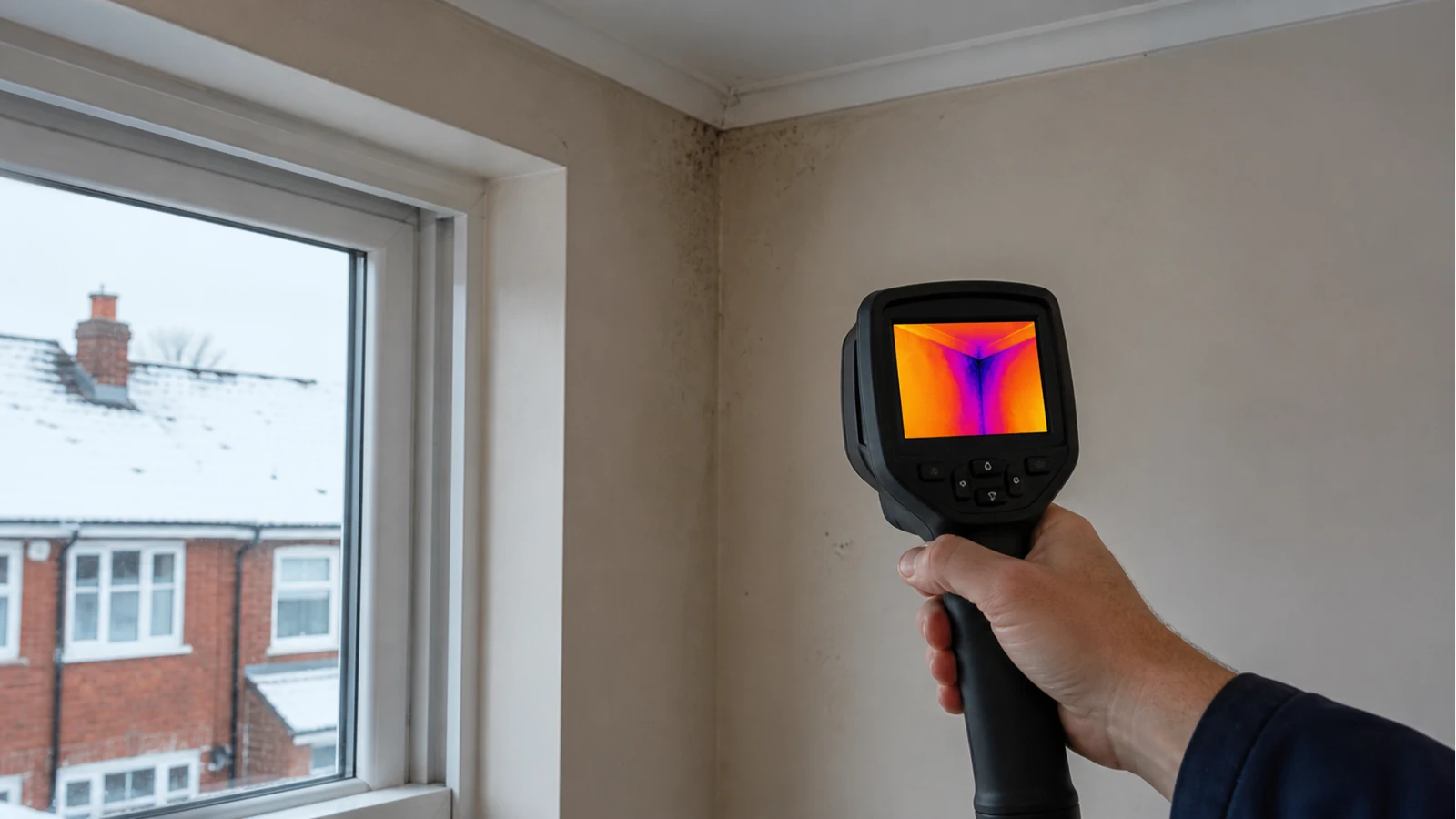
Direct answer: a thermal camera can show cold surface patterns in a UK damp survey, but dew-point context and moisture metering decide whether the pattern is condensation risk, a cold bridge clue, or something that needs leak follow-up. The camera is not a moisture detector and it does not see through walls.
Why dew point belongs next to the image
A cold bedroom corner may be colder because of geometry, insulation gaps, air leakage, dampness or occupant conditions. RICS introduction to building thermography notes that building thermography needs context and that suspected dampness should be confirmed with a damp meter. That matters in disputes where a buyer, tenant or homeowner asks for a single cause from one coloured image.
A cautious survey path
- Record indoor air temperature and relative humidity before interpreting the image.
- Check whether the cold patch sits on a common bridge: external corner, window reveal, lintel, floor edge, north wall or behind furniture.
- Capture a thermal frame and a visible reference, preferably with enough outline for a reader to locate the building element.
- Compare the surface temperature pattern with the calculated dew-point risk. Thermography Services dew-point analysis guide describes dew-point analysis as a way to flag surfaces at condensation risk.
- Use a moisture meter or further building-pathology checks before writing damp conclusions.
Condensation, bridge or leak clue?
| Pattern | Possible meaning | Report wording discipline |
|---|---|---|
| Cold linear reveal or corner | Thermal bridge or air leakage risk | Say it is consistent with a bridge; do not call it a leak |
| Cold patch below roof or around staining | May justify moisture checks | State follow-up evidence needed |
| Cold surface near dew point with mould risk | Condensation conditions may exist | Pair with RH, ventilation and occupancy observations |
| Pattern after sun or heating changes | False anomaly risk | Repeat under better conditions if material to the conclusion |
Residential Surveying cold bridging guidance explains why cold bridging can drive mould and be mistaken for other damp causes. That is the professional reason to keep the language narrow: "consistent with", "requires confirmation", and "under the conditions observed" are not hedges; they are accuracy.
Who should not make a stronger claim
Do not promise a definitive damp diagnosis from one thermogram, do not allocate legal responsibility from a surface pattern, and do not imply the device directly detects moisture. The reader should proceed only when they can combine the image with humidity, temperature, moisture readings and building context.