Thermal Imaging Radiator Sludge Vs Airlock Uk
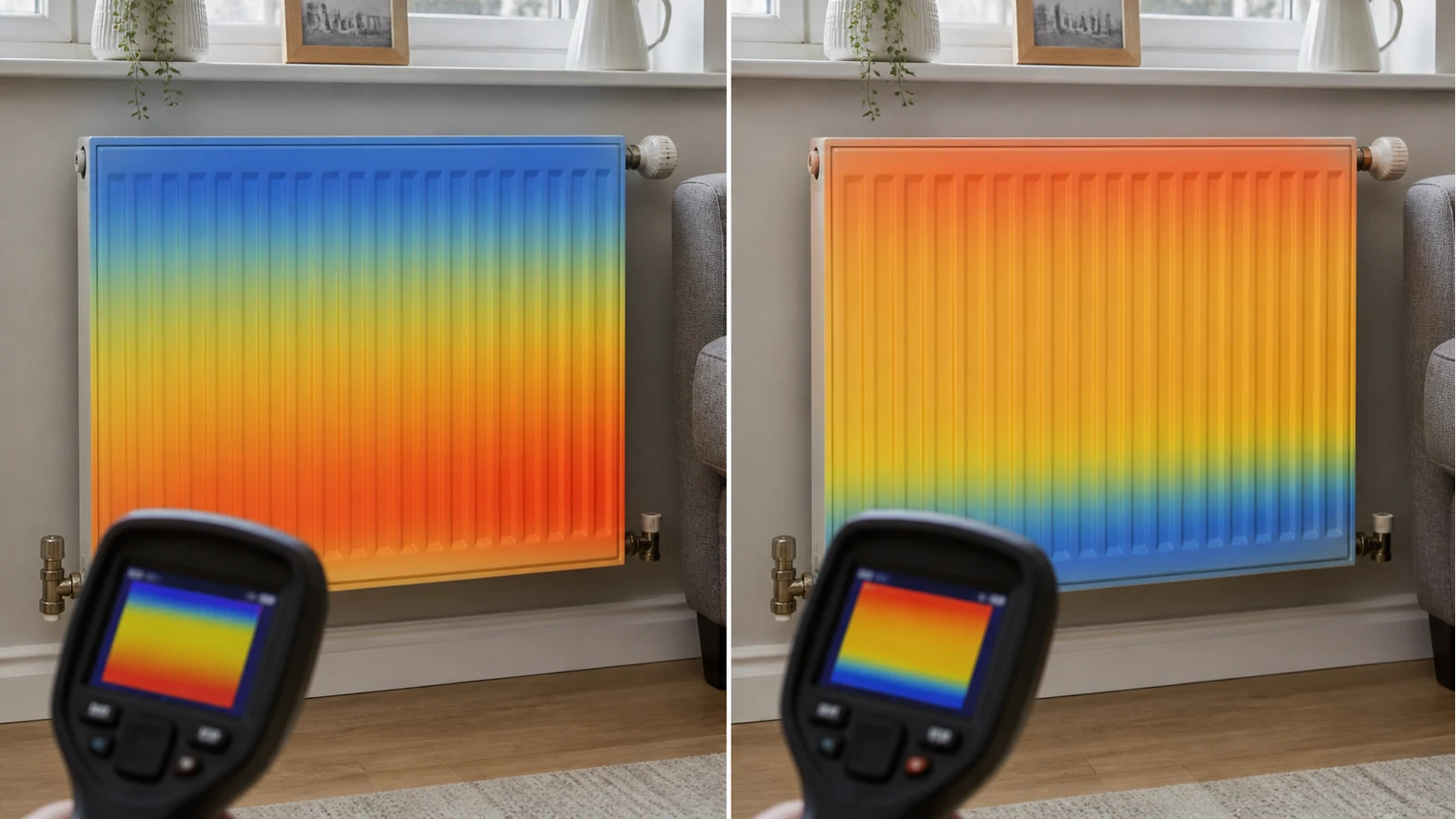
Direct answer: thermal imaging can show radiator temperature patterns quickly: cold-at-top patterns often fit trapped air, while cold-at-bottom patterns are commonly associated with sludge. It is a faster visual triage tool, not laboratory proof of what is inside the radiator.
The pattern before the prescription
UK heating guidance commonly separates cold tops from cold bottoms. BestHeating cold radiator guidance links cold tops with trapped air and cold bottoms with sludge build-up, while tado radiator balancing guide distinguishes bleeding from balancing and more involved remedies. A thermal image helps by showing the whole panel at once instead of forcing a few hand or spot checks.
Diagnostic ladder
- Let the heating run long enough for the radiator and pipework to settle into a useful pattern.
- Check simple air symptoms first: cold top, gurgling, uneven upper section and whether bleeding changes the pattern.
- Scan the whole panel for cold bottom, cold centre, blocked columns or uneven flow from one side.
- Compare flow and return pipe behaviour with the rest of the system.
- Decide whether the likely next step is bleeding, balancing, valve investigation, flushing advice or a wider system check.
What the image can support
| Thermal pattern | Possible clue | Do not overclaim |
|---|---|---|
| Cold band at top | Trapped air is plausible | Still check valves and system behaviour |
| Cold bottom or centre | Sludge or flow restriction is plausible | Do not sell a flush from image alone |
| One side hot, other side cool | Balancing or valve issue may be involved | Compare with pipe temperatures and other radiators |
| Odd patch on glossy paint or behind a cover | Reflection or obstruction may mislead | Change angle, remove cover if appropriate, re-check |
Plumbers 4U radiator cold spot diagnosis lists thermal imaging among tools for mapping radiator temperature distribution. That mapping is the value: it gives the engineer and homeowner a shared picture before any costly recommendation.
Stop conditions
Stop making camera-led conclusions when the system has only just started, the radiator is hidden behind a cover, the paint is reflective, valves are partly closed, or several radiators show related symptoms. In those cases the image is one clue in a normal heating diagnosis.