High Resolution Compact Thermal Imaging Camera Explained: A UK Buyer's Guide
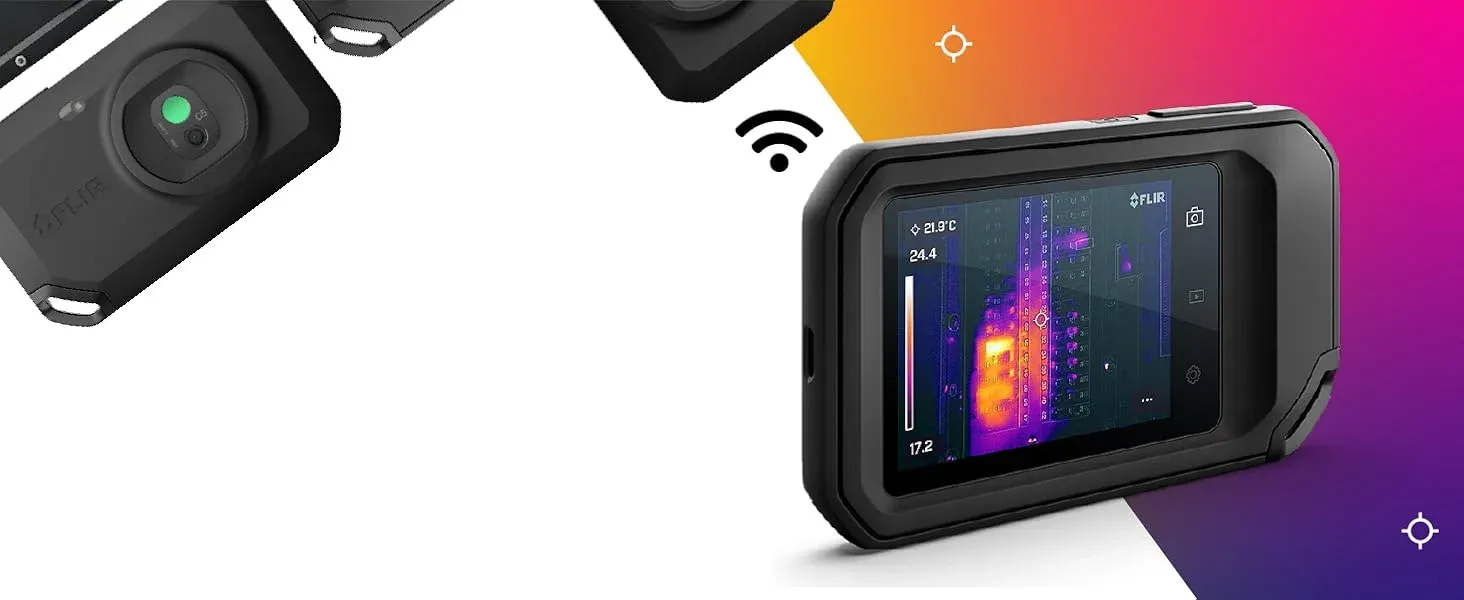
Short answer: A high resolution compact thermal imaging camera is a pocket-sized imager with a dense enough detector — 160 × 120 pixels, or 19,200 measured temperature points on the FLIR C5 this store sells — to separate a small heat anomaly from its background, so a spec-led UK buyer can turn a suspicion into reportable evidence. Resolution is only half the story: thermal sensitivity (NETD), field of view and MSX processing decide what you can actually read on screen.
What "high resolution" really means on a compact thermal camera
On a thermal camera, resolution is the number of pixels in the thermal detector, and each pixel is a separate temperature measurement. A 160 × 120 sensor gives 19,200 measured points across the scene; a cheap 80 × 60 gadget gives just 4,800. More points mean you can tell a single warm terminal apart from the busbar beside it, or a damp edge apart from the cold wall around it, at a real working distance.
The catch a spec-led buyer needs to know: MSX is not thermal resolution. MSX (Multi-Spectral Dynamic Imaging) embosses the outlines from the 5-megapixel visual camera onto the thermal image so it looks crisp and labelled, but the underlying heat data is still 160 × 120. Judge thermal detail by the sensor and its sensitivity, not by how sharp MSX makes the picture look.
The specifications that decide image quality (not just pixel count)
Line these up on a data sheet before you pay, rather than trusting adjectives like "crystal clear":
| Specification | What it controls | FLIR C5 (sold here) |
|---|---|---|
| Thermal resolution | How many temperature points, so how small a fault you can resolve | 160 × 120 (19,200 px) |
| Thermal sensitivity (NETD) | Smallest temperature difference visible; lower is better | <70 mK |
| Object temperature range | Coldest to hottest it can measure | −20°C to 400°C |
| Accuracy | How close a reading is to the true temperature | ±3°C |
| Field of view | How much scene fits in frame at distance | 54° × 42° |
| Image fusion | How thermal and visual are combined for reading | MSX, picture-in-picture |
Sensitivity matters as much as pixel count: damp patches and loose electrical joints often show as differences of only 1–3°C, and a <70 mK sensor separates them cleanly.
How the FLIR C5 compares on paper
The camera this guide points to is the FLIR C5 Compact Thermal Imaging Camera (£1049.86 inc VAT): a 160 × 120 true thermal detector with <70 mK sensitivity, MSX, a 5-megapixel visual camera, a 3.5-inch touchscreen, WiFi with FLIR Ignite cloud reporting, IP54 sealing and a 2-metre drop rating.
Set honestly against the alternatives: a clip-on smartphone attachment gives far fewer measured points and depends on an app; larger survey cameras push detectors to 320 × 240 and NETD below 50 mK, but cost several times more and rarely leave the van. If your work needs that survey-grade tier, the C5 is not it — but for first-line diagnostics across UK sites it resolves what most jobs require. Compare the numbers against other FLIR models, Testo units or a phone attachment before you commit.
When higher resolution is worth paying for — and when it isn’t
Close up on a consumer unit, a distribution board or a radiator, 160 × 120 is plenty; you are inches away and the target fills the frame. Higher resolution earns its price on small targets at distance — a single connector on a pole, or a flat-roof defect scanned from the ground. And no detector fixes poor technique: emissivity settings, reflected temperature and stable conditions affect accuracy more than a few hundred extra pixels. For the deeper measurement workflow, see our professional compact thermal imaging camera guide; if daily carrying is your priority, the portable compact thermal imaging camera guide covers handling and battery.
Frequently Asked Questions
Is 160 × 120 high enough resolution for professional thermal imaging?
For close-range building, electrical and mechanical inspections it is. 160 × 120 gives 19,200 measured points, enough to separate a hot terminal or a damp edge from its surroundings. Very small targets at distance benefit from higher-resolution detectors, but most UK first-line diagnostics do not need them.
Does MSX increase thermal resolution?
No. MSX embosses visual outlines from the 5-megapixel camera onto the thermal image so it is easier to read, but the thermal detector is still 160 × 120. Judge thermal detail by the sensor resolution and NETD, not by how crisp MSX makes the picture.
What thermal sensitivity (NETD) should I look for?
Lower is better. The FLIR C5 is rated below 70 mK, so it can distinguish temperature differences under 0.07°C — enough for subtle damp or insulation patterns. Premium survey cameras go below 50 mK, at a much higher price.
Can I confirm the price and warranty before I buy?
Yes. The FLIR C5 is listed at £1049.86 inc VAT (£874.88 ex VAT) with a 12-month warranty, free next-day UK delivery and 30-day returns. Confirm the current figures on the product page before ordering.
Compare the full FLIR C5 spec sheet
View Specifications — £1049.86