The Ultimate Guide to Professional Compact Thermal Imaging Camera in the UK
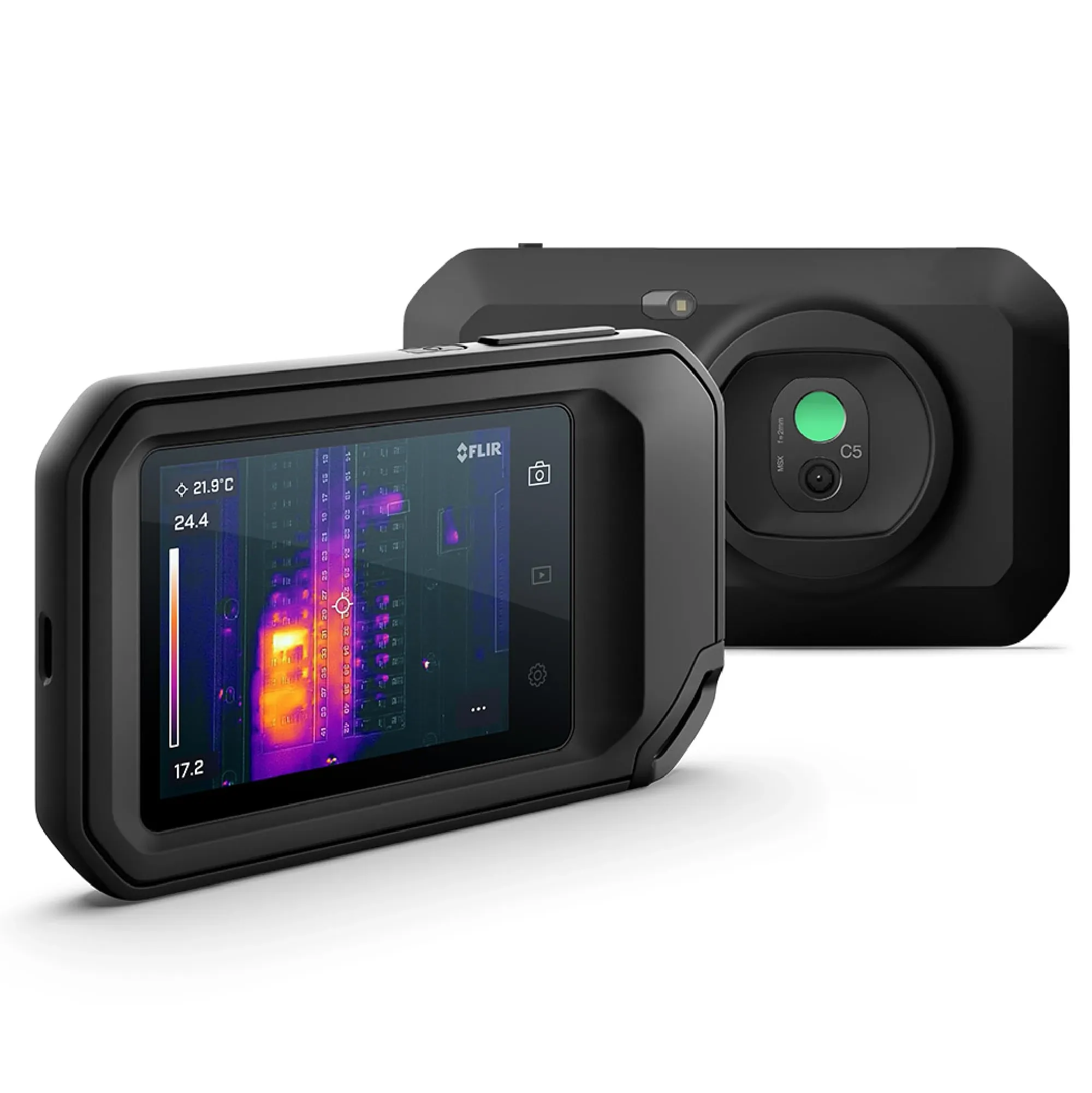
Short answer: A professional compact thermal imaging camera is a pocket-sized imager built to a measurement standard — a true 160 × 120 detector, <70 mK sensitivity and ±3°C accuracy on the FLIR C5 — so a UK facilities or maintenance team can catch electrical and mechanical temperature anomalies on a routine round before they turn into unplanned downtime. Used properly it is a screening and trending tool, not a final diagnosis.
What makes a compact thermal camera "professional"
At the core of any thermal camera is a microbolometer: a detector that converts infrared energy into a thermogram, where every pixel holds a temperature value. The line between a professional tool and a novelty is not size but measurement quality. A professional-grade unit offers real thermal sensitivity (well under 100 mK; the FLIR C5 is rated below 70 mK), dependable accuracy (±3°C) and proper measurement controls — emissivity correction, reflected apparent temperature and spot or area readings — rather than a colourful picture from an 80 × 60 gadget.
Core applications across a facilities estate
One compact imager covers a surprising amount of a mixed estate — warehouses, schools, hotels and light industrial sites:
- Electrical: overheating breakers, loose terminals and overloaded circuits on panels and distribution boards. For the electrician’s workflow see our electrical thermal imaging guide.
- Mechanical: hot motor bearings, misaligned couplings and pump problems showing as abnormal temperature rise.
- HVAC: radiator flow, blocked coils and duct air leaks.
- Building fabric: missing insulation, thermal bridging and damp. For property surveys see our thermal camera for home inspection guide.
Thermography basics that keep readings trustworthy
A reading is only as good as the setup behind it. Three things decide whether numbers are comparable from one round to the next:
- Emissivity: matte surfaces (around 0.95) read reliably; shiny metal reflects surrounding heat and needs correction or a matt reference.
- Reflected apparent temperature and environment: sunlight, draughts and a small indoor/outdoor temperature difference all create false patterns.
- Distance and field of view: the further away you are, the larger the real-world area each pixel covers, so small targets need you to move closer.
For a defensible baseline, record the same asset from the same viewpoint with the same settings each time. Uncalibrated readings should not drive a safety decision on their own.
Building a preventive-maintenance baseline (and the ROI)
The practical payback for a facilities team is trending. Capture a thermal baseline for each critical asset — a main switchboard, a supply pump, a key motor — then compare on each round and watch for a temperature that is creeping up. Catching a hot bearing or a loose lug early turns a planned repair into a routine one instead of an out-of-hours failure that stops the site. A single avoided outage on a critical pump or switchboard can outweigh the price of the camera, and the images give you documentation for audits and insurers.
Because the C5 syncs images over WiFi to the FLIR Ignite cloud, agree the data location, access and export policy with your IT team before you roll it out across a crew — corporate data leaving site usually needs sign-off.
Where the FLIR C5 fits
The FLIR C5 (£1049.86 inc VAT, £874.88 ex VAT) pairs a 160 × 120 detector, <70 mK sensitivity, MSX and a 3.5-inch touchscreen with IP54 sealing and a 2-metre drop rating, so it survives a shared tool store and is small enough that the team actually carries it. It comes with a 12-month warranty, free next-day UK delivery and 30-day returns. When a job needs finer detail, step up to the resolution discussion in our high resolution compact thermal imaging camera guide, or the handling detail in the portable compact thermal imaging camera guide; escalate to a specialist survey for anything beyond first-line screening.
Frequently Asked Questions
What counts as a professional compact thermal imaging camera?
One built to a measurement standard rather than a novelty. Look for a true thermal detector (the FLIR C5 is 160 × 120), thermal sensitivity under 70 mK, ±3°C accuracy and emissivity correction — not just a colourful image from an 80 × 60 gadget.
Can a compact camera support a preventive-maintenance programme?
Yes. If you record each critical asset from the same viewpoint with the same settings, you can build a thermal baseline and watch for rising temperatures on panels, motors and bearings before they fail. Treat it as screening that shows where to investigate further.
Does thermal imaging help with UK compliance?
It provides visual, documentable evidence that supports electrical work to BS 7671 and insulation checks aligned with Building Regulations Part L. It is supporting evidence, not a replacement for the required tests and inspections.
Will the cloud reporting work on our corporate network?
The C5 syncs images over WiFi to the FLIR Ignite cloud. Because that means company data leaving site, confirm the data location, access and export policy with your IT team before rolling it out across a maintenance crew.
Standardise your inspection rounds on the FLIR C5
View the FLIR C5 — £1049.86