Portable Compact Thermal Imaging Camera Explained: A UK Buyer's Guide
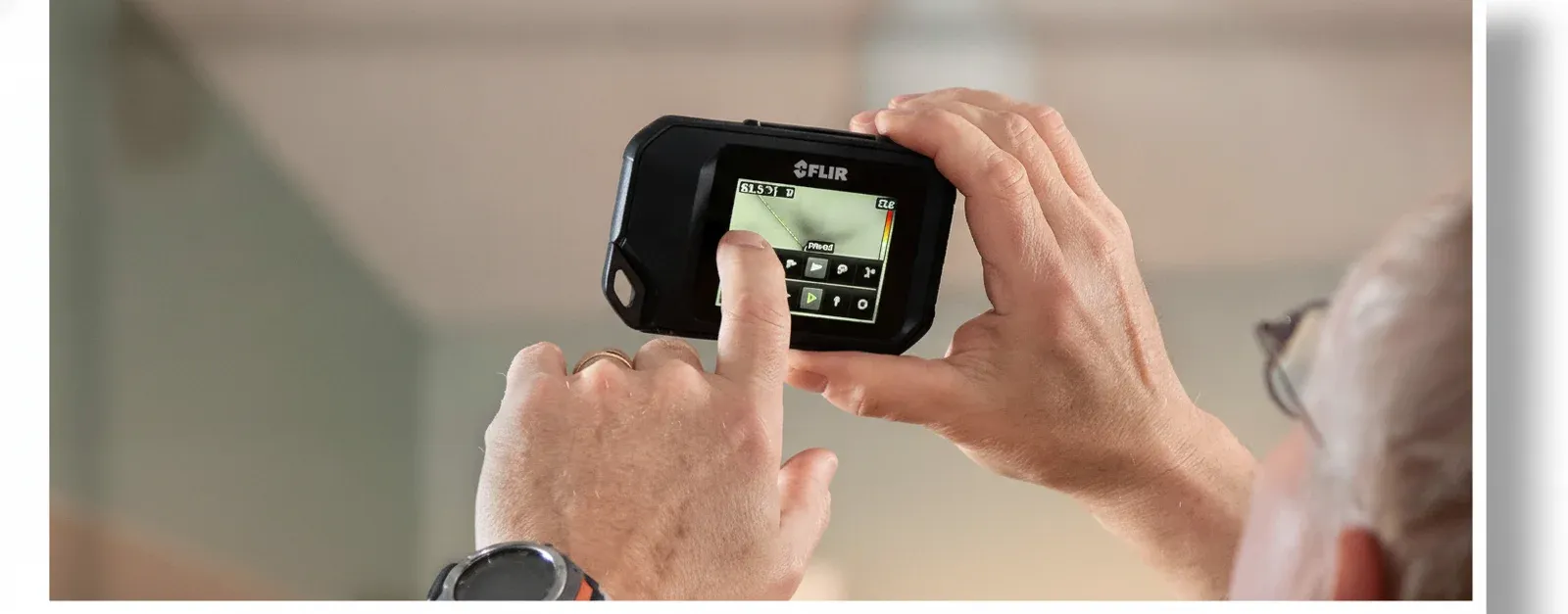
Short answer: A portable compact thermal imaging camera is a pocket-sized imager you actually carry up the ladder and into the loft, so you can narrow down a leak or a cold spot before you lift a single floorboard. For a UK heating engineer or plumber, the value is speed and fewer wasted call-backs — not treating the camera as x-ray vision.
Why "portable" is the spec that gets used
A thermal camera left in the van never finds a fault. The reason to buy a genuinely portable unit is that it comes out on every call-out: the FLIR C5 this store sells is 138 × 84 × 24 mm and about 0.19 kg, IP54-sealed against dust and splashes and rated for a 2-metre drop, so it lives in a jacket pocket or the top of the tool bag rather than getting left behind.
If your last job meant lifting two boards on a hunch and still missing the weeping joint, that is exactly what a pocket imager is meant to cut down: a few minutes of scanning to decide where to open up, instead of guessing.
How a portable thermal camera actually helps you find a leak
A thermal camera reads surface temperature, not what is behind the surface. On a wet floor it shows the cool, evaporative pattern where a pipe is weeping; on underfloor heating it shows the warm run of the loops and the cold gaps; on a radiator it shows sludge as a cool bottom corner. That is a fast clue, not a diagnosis. Work it in three steps:
- Scan to narrow the suspect area quickly.
- Confirm with a moisture meter or a pressure test before you commit to opening up.
- Only then lift boards or cut back plaster — on evidence, not a hunch.
The honest limit: a cold patch can mean a leak, condensation or missing insulation, so the follow-up check is what stops you breaking into the wrong spot.
What to check before you buy (for on-the-move trades)
These are the questions buyers ask most about a handheld unit:
- Enough resolution and sensitivity: 160 × 120 (19,200 points) with <70 mK sensitivity resolves pipes, boards and consumer units at close range. For the detail on pixels and NETD, see the high resolution compact thermal imaging camera guide.
- Temperature range: −20°C to 400°C covers cold floors through to overheating electrics.
- Battery and charging: the C5’s built-in battery is rated at about four hours of continuous use and charges over USB-C. On back-to-back winter call-outs, keep a USB-C power bank or van charger so it is ready at the next address.
- Screen and gloves: the 3.5-inch screen is capacitive, so thin touchscreen-compatible gloves work but thick work gloves usually will not — many engineers keep a liner glove for operating it.
- Emissivity control: set emissivity per surface. Matte plaster and painted pipes (around 0.95) read reliably; bare copper or foil (below 0.1) reflect surrounding heat and mislead unless you adjust or tape them.
- Reporting on site: WiFi and the FLIR Ignite cloud let you drop annotated images into the job file before you leave, which helps justify the repair to the customer.
Portable versus bulky — and where the FLIR C5 sits
A full-size survey camera has more pixels and lower NETD, but it is heavier, pricier and, in practice, stays in the van. A dedicated pocket unit also beats a clip-on phone attachment for daily work: it is more rugged, does not tie up your phone, and avoids the unstable app connections and limited measurement points common to attachments. The FLIR C5 is £1049.86 inc VAT (£874.88 ex VAT) with a 12-month warranty, free next-day UK delivery and 30-day returns — a first-line pocket tool, not a survey-grade replacement. Facilities teams building a routine round should also read the professional compact thermal imaging camera guide.
Frequently Asked Questions
Can a portable thermal camera find a leak under floorboards?
It points you to the right area fast by showing the cool, evaporative pattern of a weeping joint or the warm run of an underfloor loop, often in a few minutes. It does not see through the floor, so confirm with a moisture meter or pressure test before you lift boards.
How long does the battery last on a job?
The FLIR C5 has a built-in battery rated at about four hours of continuous use and charges over USB-C. For back-to-back winter call-outs, keep a USB-C power bank or van charger so it is ready at the next address.
Can I use the touchscreen with gloves?
The C5 has a capacitive 3.5-inch touchscreen, so thin touchscreen-compatible gloves work but thick work gloves usually will not. Many engineers keep a thin liner glove for operating the screen on site.
Is a dedicated camera better than a phone thermal attachment?
For daily site work, yes. A dedicated unit is more rugged, does not tie up your phone, and avoids the unstable app connections and limited measurement points reported with clip-on attachments.
Put a FLIR C5 in your pocket for the next call-out
View the FLIR C5 — £1049.86