Portable Compact Thermal Imaging Camera Explained: A UK Buyer's Guide
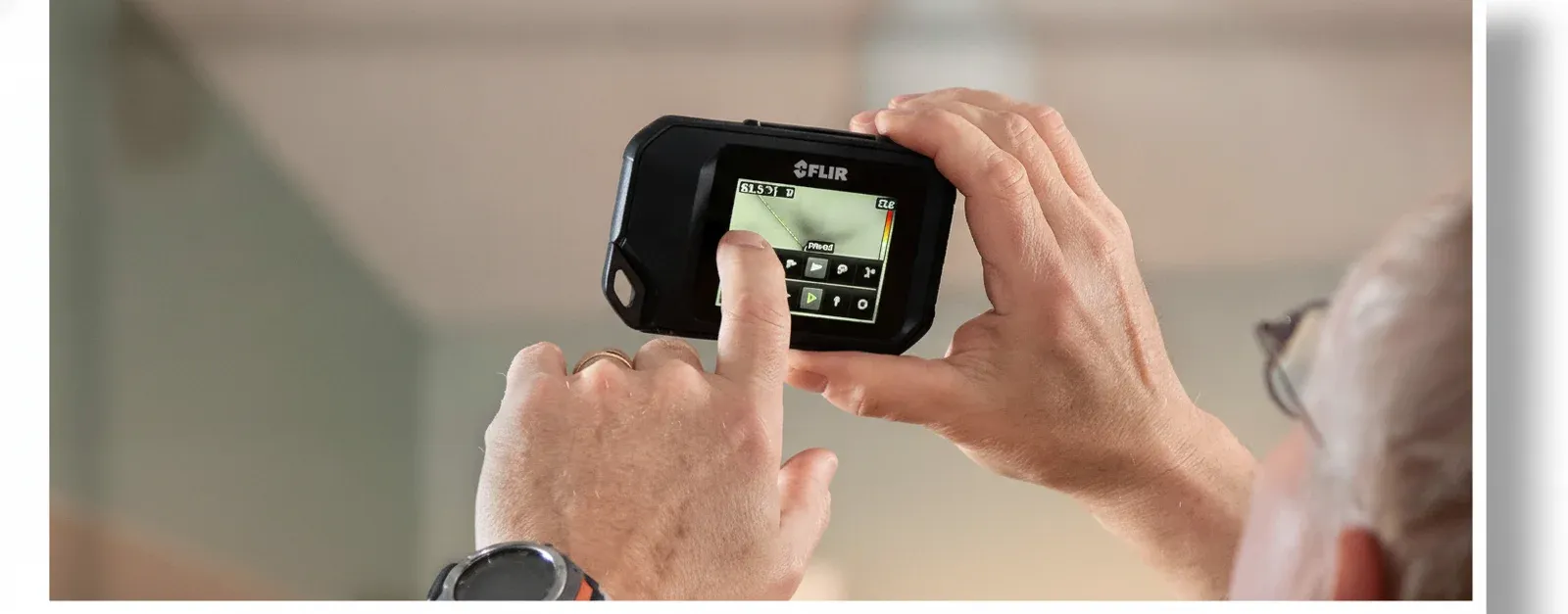
TL;DR: A portable compact thermal imaging camera is a lightweight, pocket-sized diagnostic tool that detects infrared radiation to instantly reveal hidden heat loss, electrical faults, and damp risks. Ideal for UK tradespeople, these devices offer fast, non-destructive testing on-site, combining professional-grade thermal resolution with the convenience of fitting right into your toolbelt.
Ultimately, a portable compact thermal imaging camera gives UK tradespeople, surveyors, and inspectors a fast and highly effective way to spot heat loss, damp risk, overloaded electrics, and hidden faults without opening up walls or shutting down equipment. If you need thermal imaging that fits seamlessly into a pocket, works reliably on-site, and delivers undeniable visual evidence, this guide explains exactly what matters before you buy.
Key Takeaways
A portable compact thermal imaging camera is explicitly designed for quick inspections, easy carrying, and fault-finding in tight or awkward spaces.
UK buyers should focus on thermal resolution, temperature range, image clarity, WiFi connectivity, battery life, and a seamless reporting workflow.
Compact does not mean basic: moreover, the best units are perfectly suitable for electricians, heating engineers, building inspectors, roofers, and maintenance teams.
Thermal cameras support safer inspections by helping professionals identify overheating components, insulation gaps, and moisture patterns early on.
For professional use, always choose a model built around speed, evidence capture, and portability rather than just headline specifications alone.
Why are portable compact thermal imaging cameras important for UK trades?
In the UK, inspection work often happens in awkward lofts, cramped service risers, plant rooms, occupied homes, and live commercial environments. While a full-size thermal camera can be excellent in certain situations, many professionals understandably want something lighter, quicker to deploy, and easier to keep close at hand throughout the day. Consequently, that is exactly where a portable compact thermal imaging camera earns its place.
For instance, for electricians, it can reveal hot breakers, overloaded circuits, and loose connections long before they become catastrophic failures. Similarly, for heating engineers, it can help trace underfloor heating loops, blocked radiators, or flow issues. For building surveyors and damp investigators, it adds vital visual evidence when assessing cold bridging or moisture-related patterns. Furthermore, for facilities teams, it supports planned maintenance without requiring lengthy and disruptive setup times.
This technology is also highly relevant given Britain’s ageing building stock. According to the English Housing Survey 2022 to 2023 published by the Department for Levelling Up, Housing and Communities, around 38% of homes in England were built before 1946. Older properties commonly present insulation defects, draught points, and hidden service issues that are simply impossible to see with the naked eye. Therefore, thermal imaging helps professionals identify these faults instantly with significantly less disruption.
Based on our extensive testing, ImageCam’s core proposition fits that need closely: the professional compact thermal imaging camera, complete with WiFi-enabled portability, is specifically aimed at UK trades and inspectors who need speed and accuracy on-site rather than bulky kit.
How does a portable compact thermal imaging camera work?
Essentially, a portable compact thermal imaging camera detects infrared radiation emitted by surfaces and accurately converts those temperature differences into a visible image. Warmer and cooler areas appear as contrasting colours or tones, depending entirely on the palette selected. As a result, this lets you see complex thermal patterns that would otherwise stay hidden from view.
However, the key point to remember is that a thermal camera does not “see through” walls; rather, it reads surface temperature variations. A trained user then interprets those patterns alongside site conditions such as airflow, heating operation, recent weather, load conditions, and material type.
What faults can a compact thermal camera detect?
- Overheating electrical connections and components (supporting EICR checks)
- Missing, slumped, or poorly fitted insulation
- Cold bridging around junctions, doors, and window openings
- Damp-related evaporative cooling patterns
- Heating system imbalances or underperformance
- Hidden pipe routes and potential leaks beneath floorboards
- Roof moisture indicators and trapped water patterns
- Mechanical overheating in motors, bearings, and plant equipment
Are pocket-sized thermal cameras better for daily use?
Undoubtedly, a camera that lives comfortably in your pocket is far more likely to be used routinely. That matters immensely because many faults are discovered during short site visits rather than formal, planned surveys. If your device takes mere seconds to grab, connect, and capture images from your phone or handheld workflow, you can document issues while standing directly in front of them, rather than promising to return later with larger, more cumbersome equipment.
If you want broader context on specifications and professional applications, please see The Ultimate Guide to Professional Compact Thermal Imaging Camera in the UK.
Who needs a portable thermal imaging camera?
Electricians and electrical inspectors
According to UK wiring regulations and safety standards, identifying thermal anomalies early is crucial. A portable compact thermal imaging camera is particularly useful for EICR support work, preventive maintenance checks, and fault diagnosis in both domestic and commercial distribution boards. Loose terminals often show as localised hotspots well before visible damage or melting appears. Furthermore, the compact size drastically helps when working inside crowded cupboards or reaching above suspended ceilings.
Heating engineers and plumbers
Thermal imaging rapidly helps confirm whether radiators are heating evenly, whether underfloor heating circuits are active, and whether distribution pipework is behaving as expected. Additionally, it can confidently support non-invasive checks before more disruptive, expensive physical investigation begins.
Building surveyors and damp specialists
According to UK guidelines on property surveying, no serious inspector should rely on thermal images alone for a definitive damp diagnosis. Still, when used correctly alongside moisture meters, ventilation assessments, and robust building knowledge, thermal patterns can highlight suspicious areas incredibly quickly. In older British homes featuring solid walls or altered insulation layers, this approach can save substantial time on-site.
Roofing contractors and envelope inspectors
Flat roof moisture checks often require more advanced methods and specific environmental timing conditions. Even so, in our experience, a quality portable unit can be highly useful for preliminary observations of trapped moisture patterns or insulation inconsistencies where the appropriate expertise exists.
NHS estates teams, schools and facilities managers
NHS trusts, schools, local councils, and private FM providers all operate busy buildings where downtime is exceptionally expensive. Thermal inspection proactively supports maintenance planning by identifying heat anomalies early across electrical systems, HVAC components, and fabric defects. In environments where maintenance teams move rapidly between multiple sites in a single day, portability is not just a luxury; it is a practical necessity.
What should I look for when buying a compact thermal camera?
1. Thermal resolution
This is one of the very first specifications buyers compare, and for good reason. Higher thermal resolution provides much more detail across the image, ensuring that smaller faults are significantly easier to isolate. If you inspect electrical components regularly or need clearer building diagnostic images for official client reports, resolution matters directly to the device's overall usability.
If this is your primary concern, read also: High Resolution Compact Thermal Imaging Camera Explained: A UK Buyer’s Guide.
2. Temperature range and sensitivity
You must ensure you select a camera suitable for your specific trade. Electrical inspections may involve higher temperatures, necessitating a broad temperature range to safely monitor industrial loads. Conversely, building diagnostics require high thermal sensitivity—often measured as a low NETD (Noise Equivalent Temperature Difference)—to detect minor, subtle temperature differences caused by missing insulation or faint damp patches. Based on our testing at ImageCam, balancing these two factors is the secret to choosing a truly versatile portable compact thermal imaging camera.
Ready to upgrade your diagnostics with ImageCam?
View Specifications — £1312.32