The Ultimate Guide to Professional Compact Thermal Imaging Camera in the UK
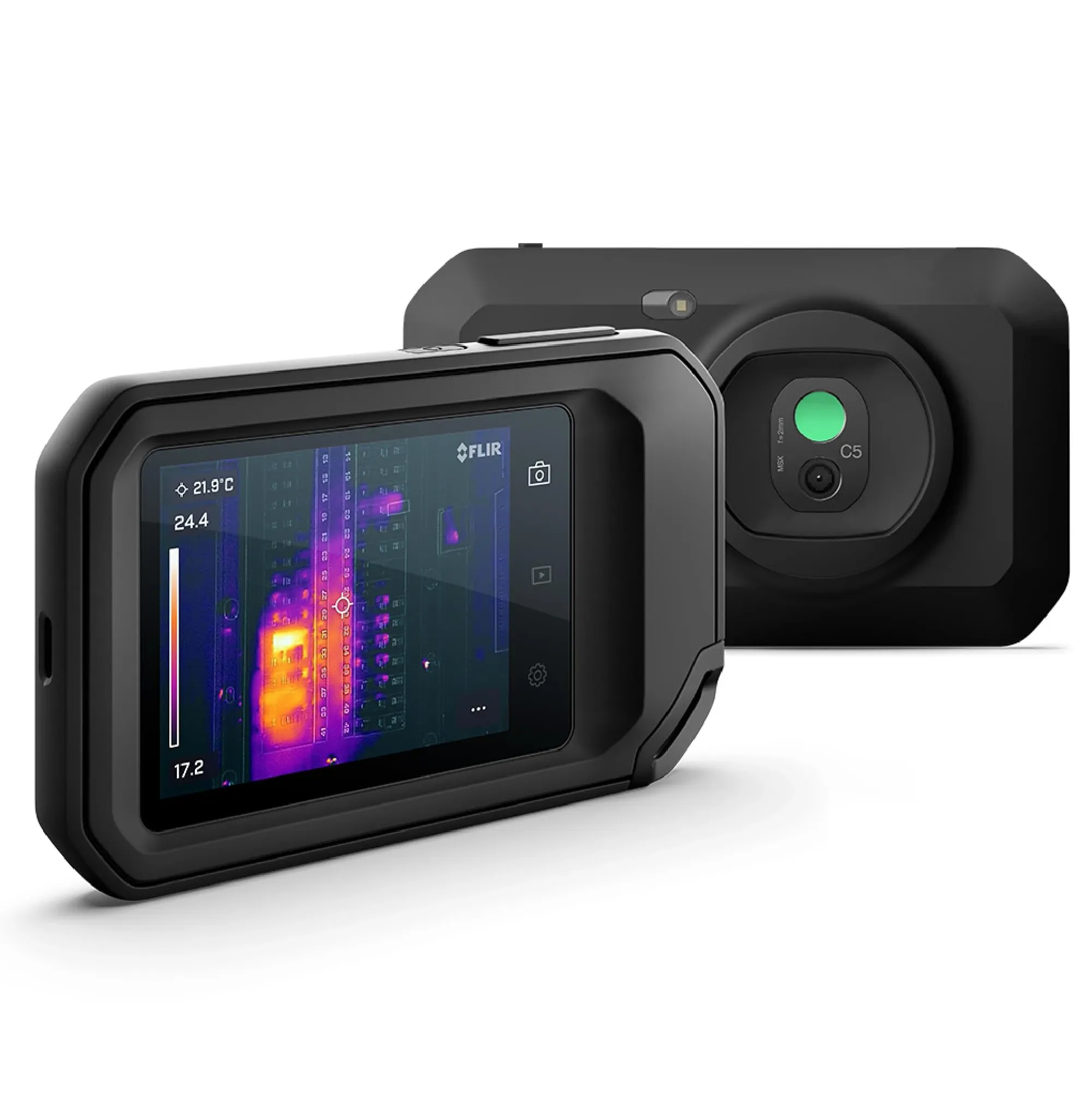
Finding a hidden leak behind a plastered wall or identifying an overloaded circuit before it fails used to require destructive testing, guesswork, and hours of wasted labour. Modern UK trades and inspectors face intense pressure to diagnose faults accurately and rapidly. The adoption of a professional compact thermal imaging camera entirely removes the guesswork from site inspections. By visualising heat signatures invisible to the naked eye, these pocket-sized devices allow professionals to identify faults instantly, saving both time and money.
Thermography is no longer restricted to heavy, cumbersome equipment reserved for specialist surveyors. The technology has shrunk, becoming highly portable without sacrificing the thermal sensitivity required for rigorous diagnostic work. Whether you are an electrician conducting an Electrical Installation Condition Report (EICR), a heating engineer tracing underfloor heating loops, or a building surveyor assessing insulation continuity, integrating a compact thermal imager into your daily toolkit is a necessity.
Key Takeaways
- Instant Diagnostics: A professional compact thermal imaging camera allows UK trades to locate plumbing leaks, electrical faults, and insulation gaps instantly without destructive testing.
- Portability Meets Power: Modern pocket-sized units offer the high thermal resolution and sensitivity previously only found in bulky legacy models.
- Regulatory Compliance: Thermal imaging provides visual evidence to support compliance with UK Building Regulations (Part L) and BS 7671 electrical standards.
- Workflow Integration: WiFi-enabled cameras allow for immediate reporting, letting you share thermal images with clients or colleagues straight from the site.
- High Return on Investment: The time saved on fault-finding and the reduction in unnecessary repair work means these devices typically pay for themselves within a few jobs.
What Defines a Professional Compact Thermal Imaging Camera?
Not all thermal cameras are built to the same standard. The market is flooded with cheap, consumer-grade gadgets that lack the sensitivity and resolution required for professional diagnostics. A true professional compact thermal imaging camera bridges the gap between pocket-sized convenience and industrial-grade analytical power.
At its core, a thermal camera detects infrared energy (heat) emitted, transmitted, or reflected by all materials. The camera's sensor, known as a microbolometer, translates this thermal energy into a visible image called a thermogram. Each pixel in the sensor array records a temperature value, creating a comprehensive heat map of the target area.
To be classed as professional, the device must offer a specific set of technical capabilities. First is the Noise Equivalent Temperature Difference (NETD), which measures thermal sensitivity. A professional unit typically features an NETD of less than 50mK (millikelvins), meaning it can detect minute temperature differences. This is vital when looking for subtle issues like a slow micro-leak under floorboards or a slight thermal bridge in a cavity wall.
Resolution is equally critical. While consumer units might offer 80x60 pixels, a professional tool provides a much denser pixel array, ensuring detailed images where specific components can be clearly identified. For a deeper dive into how pixel counts affect diagnostics, read our guide on the high resolution compact thermal imaging camera.
Crucially, the "compact" designation means the device is designed for the reality of UK site work. It must fit in a pocket or tool belt, be rugged enough to withstand drops, and be ready to deploy in seconds. You are not lugging around a hard case; you are carrying a powerful diagnostic tool alongside your smartphone and tape measure.
Core Applications for UK Trades and Inspectors
The versatility of a professional compact thermal imaging camera makes it an indispensable asset across multiple disciplines. Below, we detail how specific trades across the UK utilise this technology to streamline their workflows and provide superior service to their clients.
Plumbing and Heating Engineering
The days of lifting multiple floorboards to find a weeping pipe are over. Heating engineers use thermal imaging to trace pipework buried in screed or hidden behind stud walls. When a boiler loses pressure, a thermal sweep of the property can quickly reveal the exact location of a leak by identifying the distinct thermal bloom of escaping hot water.
Underfloor heating (UFH) installations present another prime use case. Before signing off on a new installation or diagnosing a cold spot on an existing manifold, a quick scan will visually confirm that warm water is circulating evenly through all loops. It also allows engineers to identify sludge build-up in traditional radiators, providing visual proof to the homeowner that a power flush is required.
Electrical Inspections and Maintenance
Electrical faults manifest as heat long before they result in component failure or fire. According to data published by the Home Office, electrical distribution and appliances are consistently among the leading causes of accidental dwelling fires in the UK. Preventative maintenance is therefore critical.
Electricians use a professional compact thermal imaging camera to inspect consumer units, switchgear, and control panels. Loose connections, imbalanced loads, and overloaded circuits generate excess electrical resistance, which shows up as a bright hotspot on a thermogram. Conducting a thermal scan during an EICR provides an extra layer of diligence, ensuring that hidden fire risks are mitigated before they escalate.
Building Surveys and Energy Efficiency
With the UK's focus on achieving Net Zero and the tightening of Minimum Energy Efficiency Standards (MEES) for rental properties, building surveyors are increasingly relying on thermography. The UK has some of the oldest housing stock in Europe, making insulation assessment a frequent requirement.
A thermal camera instantly reveals missing cavity wall insulation, degraded loft insulation, and thermal bridging around poorly fitted windows. Furthermore, it is a highly effective tool for damp diagnosis. Because moisture changes the thermal mass and evaporative cooling properties of building materials, damp patches often appear distinctly cooler than the surrounding dry areas. This allows surveyors to track the source of penetrating damp without removing plaster or external rendering.
Automotive Diagnostics
Mechanics and auto-electricians also benefit from compact thermal technology. Identifying a parasitic battery drain, checking for misfiring cylinders by measuring exhaust manifold temperatures, or diagnosing binding brake calipers can be achieved in seconds. The pocket-sized nature of the camera allows mechanics to easily manoeuvre the device within cramped engine bays.
The Science of Thermography: Essential Concepts
To extract the maximum value from a professional compact thermal imaging camera, operators must understand a few basic principles of thermography. Simply pointing the camera and looking for hot spots can sometimes lead to misdiagnosis if environmental factors are ignored.
Emissivity and Material Surfaces
Emissivity is a measure of a material's ability to emit infrared energy. It is measured on a scale from 0.0 to 1.0. Materials with high emissivity, such as brick, plaster, and matte paint (typically around 0.95), provide very accurate temperature readings on a thermal camera. Conversely, highly polished metals like bare copper pipes or aluminium foil have very low emissivity (often below 0.1).
Low-emissivity surfaces act like thermal mirrors, reflecting the background temperature rather than emitting their own heat. If an operator points a thermal camera directly at a shiny copper pipe, the camera might read the reflected heat of the operator's own body rather than the water inside the pipe. Professional cameras allow users to adjust the emissivity settings to compensate for different materials, ensuring accurate diagnostics.
Delta T (Temperature Difference)
When conducting building surveys, particularly for insulation checks, a sufficient temperature difference between the inside and outside of the building is required. This is known as the Delta T. In the UK, it is generally recommended to have a Delta T of at least 10°C. For example, if the outside temperature is 5°C, the interior of the property should be heated to at least 15°C (ideally 20°C) for several hours before the survey. This forces heat to flow through the building fabric, making missing insulation or thermal bridges clearly visible on the camera.
Thermal Tuning: Span and Level
Professional cameras offer manual control over the thermal span (the range of temperatures displayed) and level (the midpoint of that range). While auto-scaling is useful for general scanning, narrowing the span allows an operator to highlight minute temperature differences. This is particularly useful when tracking subtle moisture intrusion across a ceiling, where the temperature variance might only be 1°C or 2°C.
Essential Features to Look For in a UK-Ready Device
When investing in diagnostic equipment, understanding the specifications is vital. The right professional compact thermal imaging camera will integrate seamlessly into your workflow, while an under-specced device will cause frustration.
1. Superior Thermal Resolution
The physical number of pixels on the thermal sensor determines the clarity of the image. Higher resolution means you can accurately measure temperatures from a greater distance and see finer details. This is crucial when inspecting high-level pipework or scanning a large commercial roof for trapped moisture.
2. Pocket-Sized Form Factor
Traditional thermal cameras require their own dedicated carry cases. A compact unit is designed to be carried on your person at all times. If a tool is difficult to access, it rarely gets used. A device that slips into a pocket or clips onto a tool belt ensures that thermal diagnostics are always just seconds away. Learn more about the advantages of this design in our breakdown of the portable compact thermal imaging camera.
3. WiFi Connectivity and Smart Reporting
Identifying a fault is only half the job; communicating that fault to a client, landlord, or site manager is equally important. A modern professional compact thermal imaging camera is WiFi-enabled. This allows the device to connect directly to a smartphone or tablet.
With dedicated applications, tradespeople can instantly generate professional PDF reports on-site. You can capture a thermal image of a faulty boiler component, annotate the image, add your company logo, and email it to the customer before you even leave their driveway. This level of professionalism builds immense trust and helps justify repair quotes instantly.
4. Rugged Durability
UK construction sites, damp basements, and dusty lofts are unforgiving environments. A professional tool must feature a robust build quality. Look for devices with a high IP (Ingress Protection) rating, indicating resistance to dust and water. Additionally, the camera should be drop-tested to withstand accidental falls from ladders or workbenches.
5. Ergonomics and Operation
Whether you are crawling under suspended timber floors or balancing on a stepladder, one-handed operation is a distinct advantage. Devices designed for the trade focus on intuitive interfaces. For a closer look at ergonomic designs, explore our guide on the handheld compact thermal imaging camera.
The Financial and Operational Impact for UK Businesses
Purchasing a professional compact thermal imaging camera is an investment that yields a rapid and measurable return. The financial benefits manifest in several distinct ways for independent tradespeople and larger contracting firms alike.
Drastic Reduction in Diagnostic Time
Time is the most valuable commodity for any trade professional. Spending three hours trying to locate a roof leak using traditional hose-testing methods eats into profit margins. A thermal camera can often pinpoint the exact point of water ingress within minutes. By turning a three-hour diagnostic headache into a ten-minute scan, you free up your schedule to take on more billable work.
Minimising Destructive Testing
Customers despise unnecessary damage to their properties. If you suspect a leak is behind a tiled bathroom wall, smashing off tiles to find the source is costly and creates a massive reinstatement job. Using a thermal camera to identify the precise location of the fault means you only remove the single tile necessary to make the repair. This saves money on materials, reduces clean-up time, and significantly improves customer satisfaction.
Upselling Preventative Maintenance
For electricians and HVAC engineers, thermal imaging opens up new revenue streams. Offering a "thermal health check" as part of a routine boiler service or electrical inspection provides added value to the customer. When you can show a client a thermogram of a component that is overheating and nearing failure, they are highly likely to authorise a preventative replacement. This proactive approach prevents emergency call-outs and establishes you as a trusted authority.
Supporting Compliance and Dispute Resolution
In the UK construction industry, disputes over insulation quality or damp issues are common. A thermal image provides irrefutable, date-stamped visual evidence. If a contractor is accused of failing to install cavity wall insulation correctly, a thermal survey can quickly prove or disprove the claim. Similarly, thermal reports are increasingly used to support compliance documentation for Building Regulations Part L (Conservation of fuel and power).
Best Practices for Conducting a Thermal Survey in the UK
To ensure your diagnostics are accurate and reliable, follow these professional best practices when deploying your compact thermal imaging camera on site.
- Understand the Environment: Always account for external factors. Solar loading (the sun heating a building's exterior) can mask internal heat loss or create false hot spots. For building envelope surveys, it is best to conduct scans early in the morning before direct sunlight hits the masonry.
- Check for Reflections: As discussed regarding emissivity, always move slightly when looking at a potential hotspot on a reflective surface. If the hotspot moves when you move, it is a reflection of a heat source behind you (like your own body or a radiator), not a genuine fault.
- Use Visual Context: The best professional cameras blend the thermal image with a standard optical image (often called MSX or picture-in-picture). This provides physical context, making it much easier to identify exactly which wire or pipe is overheating.
- Document Everything: Always save the thermal image alongside the standard visual photograph. When you compile your report later, having the visual reference makes it infinitely easier for the client to understand where the fault is located.
Why ImageCam is the Ultimate Tool for the Trade
The ImageCam has been engineered specifically to meet the rigorous demands of UK inspectors and tradespeople. As the definitive professional compact thermal imaging camera, it eliminates the compromise between size and performance.
Designed to fit perfectly in your pocket, the ImageCam is always ready to deploy. It features high thermal sensitivity, allowing you to identify faults instantly, whether you are tracing a micro-leak in a central heating system or scanning a consumer unit for loose connections. The true power of the ImageCam, however, lies in its connectivity. Being fully WiFi-enabled, it allows professionals to capture precise thermal data and instantly stream or share reports via their mobile devices. This seamless integration transforms how you communicate with clients, providing undeniable visual proof of faults before you even pack your tools away.
Frequently Asked Questions
Can a thermal imaging camera see through walls?
No, thermal cameras do not have x-ray vision and cannot see "through" solid objects. Instead, they detect the surface temperature of the wall. If a hot water pipe is buried in the plaster, the heat from the pipe conducts through the plaster and warms the surface of the wall. The camera detects this surface heat pattern, allowing you to map the pipe's location.
Do I need specialist training to use a professional compact thermal imaging camera?
While basic operation is highly intuitive—simply point and look at the screen—understanding thermography principles like emissivity and thermal reflection is highly recommended. Many tradespeople find that reading the manufacturer's guide and practicing on known hot/cold sources (like a kettle or a working radiator) is sufficient for daily diagnostic tasks. For complex building surveys, formal thermography certification (such as ISO 18436 PCN) is advantageous.
How effective are thermal cameras for finding water leaks?
They are exceptionally effective. Water has a high thermal capacity, meaning it retains heat or cold differently than surrounding building materials. A hot water leak will show up as a distinct bright plume. Even cold water leaks can be found, as the moisture causes evaporative cooling on the surface of plasterboard or flooring, which the camera detects as an abnormally dark (cold) patch.
Will a thermal camera work in complete darkness?
Yes. Because professional compact thermal imaging cameras detect infrared radiation (heat) rather than visible light, they function perfectly in pitch-black environments. This makes them ideal for inspecting unlit lofts, deep sub-floor voids, or working on sites without temporary power.
Identify Faults Instantly with ImageCam
Stop guessing and start seeing. Equip yourself with the WiFi-enabled, pocket-sized thermal imager built specifically for UK trades and inspectors.
Discover the ImageCam TodayReady to upgrade your diagnostics with ImageCam?
View Specifications — £1312.32